
Does cricket have anything to do with your financial life? I say, Yes!. Cricket and Financial life have some amazingly common things! There is much, we can learn from cricket and implement in our financial life. Both cricket and Financial life involves achieving goals. Let’s see what we can learn from cricket, to use in our financial life.
1. Chasing a big score is easy, if you have a good start!
In cricket, making a good score within the first 10-15 overs helps a lot. It’s much easier to score 300, if you’ve already made 80-100 runs in the first 10 overs. However if you make a very bad start; losing wickets and not making enough runs, you will have to work much hard later to reach a good score. We see this in every match. Once the first 15 overs are, well over, we have fielders placed well, all over the field and everyone is warmed up. So, a good start in the start of the match compensates for the slow run rate later, and at the end you get a good score.
In the same way, your time, at the starting years of your financial life is like a precious “wicket”. Dont lose it. The longer you have in your hand, more is the risk you can afford to take. Saving more in the start helps a lot in building corpus. For example if you invest Rs 10,000 per month for 30 yrs , you will build a huge corpus at the end. However if you decide to save additional 4,000 per month and invest 14,000 per month for first 10 yrs , you can then stop your investments and leave that accumulated corpus to grow for 20 more years to reach the same corpus. So an extra saving of Rs 4,000 per month makes sure you don’t have to take on a much larger load later. The assumption is that you get 12% return on your investments.
2. Each team member has his place in the team
What will happen if you decide to have 11 Sehwag or 11 Zaheer Khans in the team? Will India win? I doubt it! A good team has a good batting line up, great bowlers, a wicket keeper with really safe hands, and quick, sharp, athletic fielders. Having a team that is extremely dependant on one single ability, would mean that we ignore other areas and leave big wide gaping holes which in turn lead to failure… big time.
Having 11 Sehwag’s would mean we can theoretically score 400-450 in 50 overs, but then we won’t be able to stop the other team by chasing, because we will not have a great bowling attack. In the same way, if we had 11 Zaheer Khans, we might bowl out the team under 150 runs, but won’t be able to chase that tiny total either. So a balance within a team is required.
In the same way, our portfolio is a team and it has different team members like mutual funds, direct equity, ULIPs, Insurance, PPF, other debt products and of-course – cash. Each of these have different functions and are useful in different ways. You can’t afford to have your team always stuffed with a single kind of financial product unless you are super-expert in that. You can definitely favor one product or strategy, more than others, but only if you know what you are doing. This can’t be the case in general for a common investor. One cant have only equity all his life or only debt products all his life ,you need to have balance and their comes asset allocation.
3. You can’t hit sixes & boundaries every time. Just make sure your run rate is awesome!
This is my favorite! If you look at any match, 6s and 4s are always there and that what most of the viewers like to watch, but you can’t deny that the actual score comes from 1s and 2s; runs which players make consistently. It’s the core of the score. There are bowling deliveries which has to be identified well to hit boundaries, but if one tries to smash every ball out of the park, failure is almost certain! All the wickets will fall sooner rather than later. A team has to make sure that they keep taking singles and doubles consistently, and hit boundaries on weak deliveries.
In the same way, in our financial life, some years can be awesome with 50% or 100% returns like 2010-2011 or worst like -50% return in year 2008 , However dont get disheartened by these extreme years, you have to make sure you make average good returns consistently each year and keep moving towards your target. Its much easier to get 12-13% return on yearly basis compared to getting 40-50% year over year. There will definitely be times when you will make amazing returns from your money. It could be stocks, mutual funds or real estate. But don’t get used to it!. Look for a good average return overall, with great returns once in a while. Having said that, don’t feel bad if there are some years which are bad and your money does not grow a lot, because even in cricket, there are some maiden overs! . If you didn’t score any runs in an over, it does not mean that you have lost the game; it just means that you are facing a strong bowling attack.
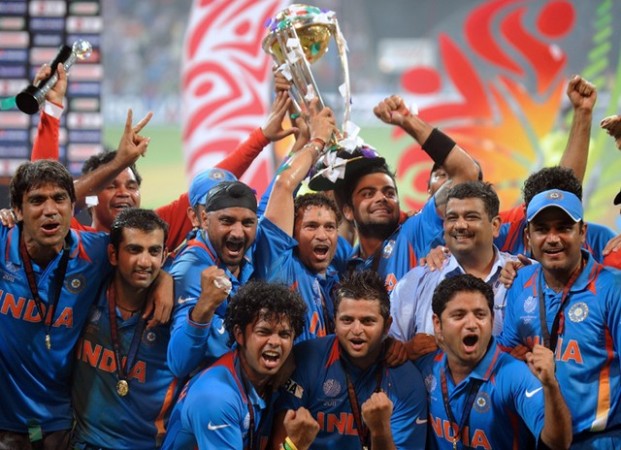
Don’t lose your sleep over it. If you look at the world cup final between India and Sri Lanka, you will appreciate the fact that India maintained its run rate till the end and made sure they preserve the wickets till end and that’s the reason it become very easy to chase the score and finally play some winning shots with the backup of our wickets in hand. In the same way, you need to ensure while chasing your goals, that you maintain a good run-rate year after year. There will be good years and bad years, but don’t let them weaken or slow your run-rate.
4. Things can go wrong! You need to be nimble & re-evaluate your strategy
A lot of unexpected things happen in a cricket match. For example there can be a bad start with very low run rate, fall of important wickets, excellent fielding by the opposing team etc., which might make you feel as if the game is all over, but there are many occasions where the losing side has won. It all happened, due to focus, being calm, reevaluating the situation and finding the strategy of what’s to be done “now.” With slow and steady progress, and some calculated risks there are many matches where losing side have won.
In your financial life, there can be many issues like losing the initial years of your life without investing any money, loss of income, change in taxation rules which affect you badly, many bad years without any good returns etc., and all this can make you feel that you will not achieve your targets on time. It’s true, that situations get tougher and reduce your chances of getting closer to your goals easily. It does not mean however, that things are over! You can always take charge of your financial life and really fix it. You can spend good time over your financial life and be extremely committed to make it awesome. Learn personal finance, find out how to get better returns from your investment, be more aware of what precautions can be taken etc. You need to be more alert and keep evaluating your strategy for improving your financial life.
Can you share more learnings from cricket which we can relate to personal finance ? Also, share if you like the analogies in this article ?

 Cribbing Investor : This investor always find problems with the system, he keep on blaming Regulators, agents, companies and everyone else but not himself! He cribs at every one and about every thing around, from how he was
  I-want-everything-Free Investor : This one needs everything for free or at throwaway price. He’ll say “It’s very expensive, Will get back to you later” to a
  Lost Investor : These are the investors who have literally no idea about anything! He gets confused between Filing Tax returns vs Paying Tax. They get confused between IRDA, SEBI and RBI! If an agent comes to them and shit jargons on their face, they will most probably buy it as they feel bad to admit that they are dumb in the area of personal finance. This guy also thinks that 80C is compulsory and keeps buying unsuitable products every year with personal loan.
 Fun-Making Investor : These investors are very naughty. They are experts and make fun out of situations. If they get a sales call, they ask tough questions like “Can you tell me
  Virgin Investor : These are fresh entrant in the area of money, who don’t even know what’s
  Not Interested Investor : They are just not interested in Investments. Only at the gun-point you can force them invest and even then, they will start an SIP of Rs 1000/per-month and start skipping their breakfast ! . They dont claim their LTA, medical bills & even HRA, it’s too much of documentation and you have to physically move from one place to other, not worth the effort! And why take
  Fantasy Investor : These investors live in fantasy world when it comes to money. Even in today’s world their aim is to become a “crorepati” (
 Pissed-Off Investor : These investors get pissed off with everything. If Insurance company increases the premium because they are smoker, they get irritated . If their demat account charges him a yearly fee, he is irritated. He is also irritated because his mutual fund now ranks 3rd, which was a top performer when he bought it. They get pissed off at ICICIDirect site for not opening at right time and they are forced to sell their stock at Rs 156 instead of Rs 157 sometime back ! .
 Informed Investor : Tele-marketers really cut their name from their lists, as they get embarrassed each time in front of these investors by talking something non-sense. These investors happily let their
  No-Idea Investor : These are investors who have no-idea about things in their financial life. they often find their insurance policies and other important papers here and there. They struggle to mention the funds name in their portfolio . Their Policies get lapsed often,They have no idea why they are saving, Their demat accounts are active from years and they have no idea that they are paying yearly charges . They never match the actual spending and their credit card bills, ever!
 Tax-Saver Investor : These investors are really mad about tax-savings!. Their financial life is at mercy of tax-saving products. You can suddenly see a new energy in them after Jan 1st each year. If you need blood, you can get it from these investors provided you convince them that they can get a tax exemption on that. Mention a section like 80K or 80Z for faster response. His last wish in life is to find out everyone involved in designing Direct tax code and then kill them to death one by one, slowly!











 You have to understand the real goal of financial planning first and then identify the areas you really need to concentrate on .