Types of mutual funds – Which every investor should know before investing
POSTED BY ON January 21, 2008 COMMENTS (25)
Do you know about the types of mutual funds you are going to invest in?
A lot of people are unaware of these different types of mutual funds even though they invest in it on a regular basis. Every mutual fund investor either he is beginner or regular must know about the categories in which mutual funds are classified in order to generate a good return.
In this article I will tell you 10 different categories of mutual funds which will be helpful for you to improve your investment portfolio.
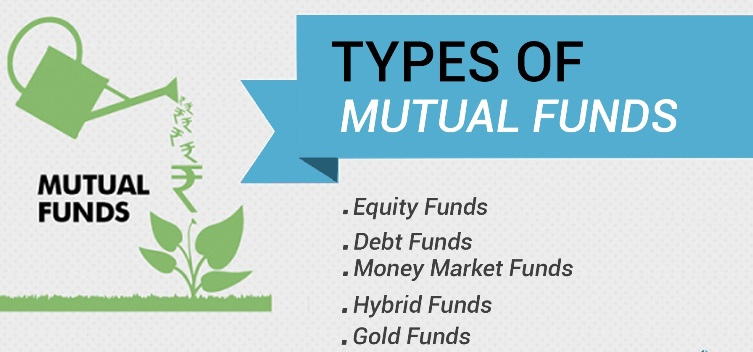
Mutual Funds
You must be aware of what are mutual funds. If not the click here to read the basics of mutual funds.
A mutual fund is the advance tool of investment which has a large number of investors. These funds are classified into different categories based on the goal of investors.
Let’s see the categories of mutual funds.
Types of Mutual Funds
Mutual funds are categorized on the basis of their objectives, style, and strategy. Investing in Mutual Funds only is not enough to get good returns. You should know about the types of mutual funds and then invest in different funds by deciding your goal.
The different types of mutual funds are enlisted below:
- Diversified Equity Funds
- Tax saving Funds (ELSS)
- Balanced Funds
- Sectoral Funds
- Mid Cap and Small Cap Funds
- Index funds
- Exchange-Traded Funds
- Fund of Funds
- Debt Funds
- Liquid Funds
Watch this video to know more about the types of mutual funds:
1. Diversified Equity Funds :
These are those mutual funds which invest across all sectors and diversify their portfolio. They invest in large companies to small companies. Which results in wide diversification. It helps in spreading risk across all sectors and return potential is very good.
2. Tax saving Funds (ELSS) :
These are a special category of mutual funds which are tax saving funds called ELSS (Equity Linked Saving Schemes). These have a lock-in period of 3 years. They are Diversified mutual funds in nature.
3. Balanced Funds :
These are the funds that put money in Equity and Debt in some balanced proportion. Balanced does not mean 50:50, it may happen that they put money in the ratio of 70:30 or 60:20 or may be 80:20 … but the ideal ratio would be 50:50. It depends on market conditions.
In a very fast booming market, a fund with 7:30 mat is a balanced one. And in a bearish market, a combination of 50:50 may be considered are an aggressive fund. These funds have low risk and low return capacity in comparison with normal equity funds.
4. Sectoral Funds :
These are Funds that invest all its money in companies of a particular sector or a bunch of sectors related to each other. The reason for this is high faith in the sector for growth and return potential because of which these funds are very risky and have high return potential.
For example Reliance Diversified Power Fund.
5. Mid Cap and Small Cap Funds :
These funds are those funds that invest their money in Midcap Stocks or small Cap stocks … Mid-cap and Small Cap companies are companies categorized by there market capitalization.
- Large Cap: greater than $10 billion
- Mid Cap: Between $2 and $10 billion
- Small-Cap: Less than $2 billion
Mid-cap and Small Cap stocks are riskier as they are small compared to large Cap stocks because of size and reachability in the market. They also have huge potential for growth so they can give superb returns too. For eg:
“Sanghvi Movers” gave a return of around 4500% in 5 years from 1992 – 1997. An investment of Rs 1 Lac was worth Rs 45 lacs in just 5 years.
In the same period “Jindal Power and Steel” gave a return of 20000 %. So an investment of Rs 50,000 was worth Rs 1 crore in just 5 years.
6. Index funds :
Index Funds are mutual funds which mirror a particular mutual fund. They put their money in the companies which are part of that index and in the same proportion as per the weightage of the company in that index. For Eg:
Franklin India Index Fund which tracks S&P CNX Nifty Fund will invest in companies in that fund in the same ratio as their weights. Suppose following is the weightage table for index:
Reliance 10%
Infosys 8%
Wipro 8%
…..
…..
Ranbaxy 3%
Then the fund will also invest in these companies’ stocks in the same proportion. The NAV’s of these mutual funds increase or decrease in the same way as the index. if the index will grow by 2.4% then NAV will also increase by 2.4 %.
7. Exchange-Traded Funds :
ETFs are just like Index funds with some differences, ETFs are a mix of a stock and an MF in the sense that
- Like ‘mutual funds’ they comprise a set of specified stocks e.g. an index like Nifty/Sensex or a commodity e.g. gold; and like equity shares they are ‘traded’ on the stock exchange on a real-time basis
- ETFs are passively managed, have low distribution costs and minimal administrative charges. Hence most ETFs have lower expense ratios than conventional MFs.
- Convenient to trade as it can be bought/sold on the stock exchange at any time of the day when the market is open (index funds can be bought only at NAV based on closing prices)
8. Fund of Funds :
These are mutual funds that invest in other mutual funds. They put money in different mutual funds in some proportion depending on their goals and objectives.
9. Debt Funds :
Debt funds are mutual funds that have their major holdings in secure and fixed income instruments like Fixed deposits, bonds. They also put a small proportion of Equity (High risk, high returns). These are secure in nature and provide low returns.
10. Liquid Funds :
Liquid funds are used primarily as an alternative to short-term fix deposits. They invest with minimal risk (like money market funds).
Most funds have a lock-in period of a maximum of three days to protect against procedural (primarily banking) glitches, and offer redemption proceeds within 24 hours. Liquid funds score over short term fix deposits.
Conclusion –
I hope you have become aware of all these types of mutual funds and now you can improve your investment by considering the funds according to your goal of an investment.
If you have any doubt you can leave your query in the comment section.

Hi Manish and JaoInvestoer Team.
As usual, I always like visiting this website if ever I have any doubt or difficulty in making financial decision.
Thank You for this.
I have a doubt regarding SIP and LumpSum investment in MFs. I understand that SIP has an edge on Lumpsum option.
But, I wanted to ask you that should I wait for Lumpsum investment in MF as I have surplus amount and was eager to invest in MF that are already running. What do you suggest? Shall I wait only for SIP way or what? IF I do lumpsum then how to know about what time to invest? Do I have to wait for market to go down or no? Or shall I do lumpsum investment irrespective of market up or down?
Thanks again for being always valuable source of information for us.
Hi Rajiv
SIP does not have any edge over lumpsum. Its just convenient and more suitable for a common man who has monthly surplus to invest.
If you have lumpsum, better do a STP .. dont want for the best time . Invest in a short term debt fund and setup a STP from it to an equity fund
Hi Manish,
First of all I would like to congratulate you/team for all your hard work and sincere efforts you put in all your articles on Jagoinvestor.com.I have started following/reading your articles recently and find it very important as for most of young youth like me who have very little knowledge on how,why,where to invest at an early stage.
Could you please brief me a little more about the difference between Index funds and ETF’s as I am not able to understand the difference in depth by reading this article.Hope to get a reply from you soon.Thanks
Its very simple .
ETF is like a stock and traded on a stock exchange, whose price moves every second as per demand and supply. Basically its exactly like a share for which you need a demat account to buy/sell.
Index Fund is a MUTUAL FUND and the stocks it buys is exactly mirroring an index (NIFTY or SENSEX) , you can buy this without a demat account and its price changes on daily level, once market closes (like any other mutual fund)
I would recommend you to buy Index fund incase you want to invest in one of them.
Very nice article on Mutual Fund. I have clear my doubt
Thanks for your comment Naileah
Hi Manish,
Thanks for the well written and informative article.
I have following investments in Mutual Funds:
1. HDFC Equity via SIP
2. UTI Opportunities via SIP
3. BSLI FrontLineEquity Fund via SIP
4. Franklin India BlueCHip Equity Fund via SIP
5. ICICI Pru Focused BlueChip Equity Fund(Lumbsum investment of 6Lakhs).
All my investments are for long term, minimum 10yrs, can you let me know your view on this please?
Hi Renga
You need to start a thread on our Q&A forum – http://www.jagoinvestor.com/forum
nice explanation ..
Hello Manish,
Your site has always been very helpful.
Thanks
Thanks Ritesh !
Choosing Index Fund may not be a good option though it depends on his/her risk apetite. One should prefer equity diversified funds, and I personally favour one sectoral fund i.e Reliance Pharma fund bcoz of its defensive nature and good performance as compared to its peers
Mayank
Not choosing index fund is a good option for those who are young , but for older people with good risk appetite , I think index funds are best , no monitoring at all and good returns . low charges !
Manish
Hi Manish..
Is there an Index MF which I can invest in through SIP route???
Saurav
Yes there are many .. search for index funds on valueresearchonline : http://www.thehindubusinessline.com/iw/2009/01/11/stories/2009011150370800.htm
Manish
Thanks Manish…
so investing in an Index fund say… ICICI Prudent Index fund or TATA Index fund (Nifty Plan-A)… which one is better??
You can never find answer like this , anyone can be ahead of other in differnet time frame , there is no major difference to look that deep and its not worth .. better take action and invest , you can decide on coin toss , investing is important , not which one at the moment
Manish
Manish,
informative
one question with index fund.
As you said with the index fund that AMC put there money in the companies which are part of that index and in same proportion as per the weightage of the company in that index then any index fund from two different companies who track same index shouldn’t behave same way with almost same returns ?
Example : HDFC Index Sensex and LICMF Index Sensex tracks sensex. As they invest into companies into this index in same proportion.
Please clarify
Amol
Amol
There are two main things which will differ .
1) Cost (the FMC can be different)
2) Responsiveness to changes , suppose some changes happen to index , how fast and accuretely funds take action also matter .
Manish
nice article…short and simple
I saw some funds with different name such as
Reliance Diversified Power Sector Fund – Institutional Plan (Bonus)
Reliance Diversified Power Sector Fund – Retail Plan (Bonus)
Reliance Diversified Power Sector Fund – Institutional Plan (D)
Reliance Diversified Power Sector Fund – Retail Plan (D)
what exactly is a Institutional Plan ? An individual can buy Institutional Plan MF ?
Milind
Milind
I think its for institutions . Not sure .
Manish
It’d be great if you add some more details about money market funds.
And, about investing in mutual funds without using brokers/agents.
Sure .. I Will put them in future
Manish
It’d be great if you add some more details about money market funds.
And, about investing in mutual funds without using brokers/agents.